Menu


How Much Can You Really Save with Heat Pump Water Heater Rebates and Incentives?
Heat pump water heater rebates and incentives can significantly reduce what you pay out of pocket when upgrading to one of the most energy-efficient water heating systems available today. Here is a quick look at what is currently on the table as of April 2026:
| Program | Who It's For | Potential Savings |
|---|---|---|
| Federal 25C Tax Credit | Homeowners & renters (2025 installs) | Up to $2,000 (30% of project cost) |
| Mass Save Rebate | Massachusetts residents | $750–$1,500 |
| Efficiency Maine Discount | Maine residents | $1,100 instant discount |
| BC Hydro Rebate | British Columbia residents | Up to $1,000 |
| Efficiency Vermont | Vermont residents | $600–$5,000 (income-based) |
| HEEHRA (California) | Multifamily projects | Up to $35M available statewide |
| EnergizeCT | Connecticut residents | $900 rebate |
| 0% Financing (Mass Save) | Massachusetts residents | HEAT Loans up to $25,000 |
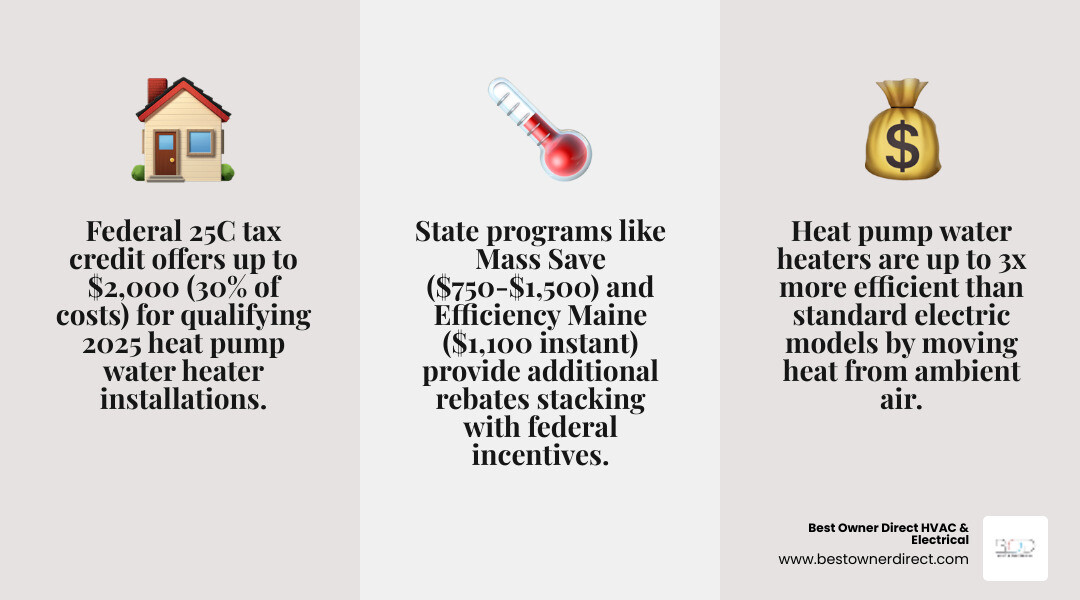
Heat pump water heaters are up to three times more efficient than standard electric water heaters — and dozens of state, utility, and federal programs exist to help offset the upfront cost of switching. But navigating all of these programs, deadlines, and eligibility rules is genuinely confusing.
That is exactly why this guide exists. Whether you are a homeowner trying to figure out if you missed the federal tax credit deadline, a renter wondering if you qualify, or someone simply looking to stack every available dollar of savings, we will walk you through everything you need to know — clearly and without the jargon.
It is worth noting that the federal 25C tax credit, which covered up to $2,000 of the cost of a qualifying heat pump water heater installation, expired on December 31, 2025. However, if you completed your installation before that date, you can still claim it when you file your 2025 federal taxes using IRS Form 5695. And even without that federal credit, state and local programs continue to offer meaningful savings across much of the country.
Understanding Heat Pump Water Heater Technology and Efficiency
Before we dive into the pile of paperwork required for heat pump water heater rebates and incentives, it helps to understand why everyone is talking about this technology. A heat pump water heater (HPWH) doesn't actually "create" heat the way a traditional electric resistance or gas heater does. Instead, it moves heat from one place to another.
Think of it like a refrigerator running in reverse. While your fridge pulls heat from the inside and pushes it out into your kitchen, a heat pump water heater pulls heat from the surrounding ambient air and dumps it into your water tank. Because moving heat is much easier than creating it, these units are incredibly efficient. In fact, they are up to three times more efficient than conventional electric models.
The "Hybrid" Advantage
Most units on the market today are actually "hybrid" water heaters. This means they have the heat pump on top for high-efficiency daily use, but they also have standard electric heating elements for those high-demand times—like when you have three relatives visiting and everyone needs a shower at once.
Beyond just heating water, these units provide a hidden perk: dehumidification. Since they pull heat from the air, they also pull out moisture, making them a fantastic choice for damp basements. If you want to dive deeper into the mechanics, check out our guide on What is a Heat Pump Water Heater.
Navigating Federal Heat Pump Water Heater Rebates and Incentives
The landscape for federal support changed recently. For several years, the 25C Energy Efficient Home Improvement Tax Credit was the "gold standard" for federal heat pump water heater rebates and incentives.
This credit allowed homeowners to claim 30% of the project cost, capped at $2,000 per year. While the 25C credit for heat pump water heaters officially expired on December 31, 2025, for new expenditures, many of our neighbors are currently looking for ways to claim this on their tax returns for work finished last year.
How to Claim the 25C Credit for 2025 Installations
If you had a qualifying unit installed by the end of 2025, you are likely eligible to claim this credit on your federal tax return filed in early 2026. Here are the key details:
- IRS Form 5695: This is the form you’ll need to file with your return.
- Non-Refundable: This credit is non-refundable, meaning it can reduce the taxes you owe to zero, but the IRS won't send you a check for any "leftover" credit amount.
- Annual Limits: There was a total yearly cap of $3,200 for all qualifying energy improvements combined, but the heat pump portion itself was capped at $2,000.
While the federal tax credit has passed its current expiration, we always recommend keeping an eye on our Promotions page for any new federal renewals or local utility updates that might pop up.
Regional Savings and Income-Qualified Programs
While federal credits get the most headlines, regional programs often provide the most immediate "cash-in-hand" savings. Programs vary wildly depending on where you live, but the goal is the same: making electrification affordable for everyone.
| Region | Primary Program | Key Incentive |
|---|---|---|
| California | TECH Clean California / HEEHRA | Focus on multifamily & low-income equity |
| Massachusetts | Mass Save | $750 to $1,500 rebates + 0% financing |
| Maine | Efficiency Maine | $1,100 instant discount at point-of-sale |
| Connecticut | EnergizeCT | $900 rebate for qualifying ENERGY STAR units |
| British Columbia | BC Hydro | $1,000 rebate for electric-to-electric swaps |
In California, the focus has shifted heavily toward multifamily housing and equity. Multifamily buildings make up about 30% of the state's residential structures, and nearly half of low-income households live in these buildings. Programs like the HEEHRA (Home Electrification and Appliance Rebates) have allocated upwards of $35 million for multifamily projects specifically to ensure renters aren't left behind in the green transition.
Are there specific heat pump water heater rebates and incentives for low-income households?
Absolutely. Many states have realized that the upfront cost of a heat pump can be a barrier for those who need the energy savings the most.
- Efficiency Vermont: Offers a tiered system where low-income residents can get up to 100% of the project cost covered (up to $5,000).
- TECH Clean California: Their Low-Income Leveraging Pilot has already helped over 500 households with retrofits, often covering the entire cost of the equipment and installation.
- HEEHRA Single-Family: In many regions, these rebates were so popular that funds for single-family homes were fully reserved by February 2026. This highlights why it is so important to check availability early.
If you’re wondering about common hurdles or specific requirements for these programs, our Heat Pump Water Heater FAQ is a great place to start. For more info on current local availability, you can also visit our Rebates section.
Eligibility Requirements and Application Deadlines
To get your hands on heat pump water heater rebates and incentives, you usually have to jump through a few hoops. Most programs aren't just giving away money for any old tank; they want to see high-performance equipment installed correctly.
Key Eligibility Factors
- ENERGY STAR Certification: Almost every rebate program requires the unit to be ENERGY STAR certified.
- Efficiency Ratings (UEF): You will often see a requirement for a specific "Uniform Energy Factor." For example, many programs require a UEF of 3.30 or higher for integrated units.
- Primary Residence: Most homeowner rebates are for your primary residence, though some federal credits (prior to expiration) allowed for second homes.
- Professional Installation: In many areas, such as British Columbia or Massachusetts, you must have the unit installed by a licensed contractor with a valid business license to qualify. DIY installations are frequently excluded from rebate eligibility.
Documentation Needed
Don't throw away your paperwork! To successfully claim a rebate, you will typically need:
- A copy of the itemized invoice showing the model number and installation date.
- Proof of purchase (receipt).
- Manufacturer’s certification statement (especially for tax credits).
- Your utility account number.
Most programs have a strict deadline for submission—often within six months of the installation date. If you're in the Cornelius area and need help ensuring your new setup meets these standards, our Water Heater Services team can guide you through the process.
How do I apply for heat pump water heater rebates and incentives in my area?
The application process usually follows one of three paths:
- Instant Discounts: This is the easiest way. Retailers like Home Depot or Lowe's often partner with utilities to provide an "instant coupon" or point-of-sale discount. You enter your zip code and utility info into a portal, get a code, and the price drops right at the register.
- Contractor-Led Rebates: Many licensed installers can apply the rebate directly to your invoice. They handle the paperwork behind the scenes, and you simply pay the lower, post-rebate price.
- Mail-in or Online Portals: You pay the full price upfront and then submit your documentation to a state or utility website. You’ll then receive a check in the mail, usually within 6 to 10 weeks.
For residents looking for a Water Heater Replacement in Cornelius OR, we recommend checking with us first to see which path is currently offering the fastest turnaround.
Maximizing Financial Benefits with Combined Incentives
One of the best-kept secrets in home improvement is "stacking." This is when you combine multiple heat pump water heater rebates and incentives to drive the net cost as low as possible.
Electrical Panel Upgrades
One common challenge when switching from a gas water heater to a heat pump is that your electrical panel might need an upgrade to handle the new load. Fortunately, many programs offer "make-ready" incentives.
- Federal Support: Up until the end of 2025, federal credits offered up to $600 for panelboard upgrades needed for energy efficiency projects.
- State Programs: Maryland's electrification program, for instance, offers up to $3,000 for "make-ready" enablement, covering ductwork and wiring.
Financing Options
If the upfront cost is still a hurdle even after rebates, financing can bridge the gap:
- 0% Interest Loans: Programs like the Mass Save HEAT Loan offer up to $25,000 at 0% interest for qualified improvements.
- Smart-E Loans: These offer low-interest, long-term financing with no money down, often allowing you to pay for the unit through your energy savings over time.
For more details on how these electrical considerations might affect your specific home, visit our Heat Pump Water Heater FAQ.
Frequently Asked Questions about Energy Efficiency
Can I still claim the federal tax credit for a 2025 installation?
Yes. If your heat pump water heater was purchased and installed by December 31, 2025, you can claim the 25C tax credit on your 2025 tax return (filed in 2026). You will need IRS Form 5695 and your receipts.
Do I need to upgrade my electrical panel for a heat pump water heater?
Not always, but it is common. While traditional electric water heaters require a 30-amp circuit, some newer "plug-in" heat pump water heaters are designed to run on a standard 120V/15-amp circuit. However, if you are switching from gas to electric, you will likely need a new circuit run to the water heater location.
What is the difference between an instant discount and a mail-in rebate?
An instant discount happens at the time of purchase, meaning you never pay the full price. A mail-in (or online) rebate requires you to pay the full price to the retailer or contractor first, and then the program sends you a reimbursement check later.
Conclusion
Upgrading your home’s efficiency doesn't have to be a financial burden. By leveraging heat pump water heater rebates and incentives, you can move toward a more comfortable, carbon-free home while keeping your budget intact. Whether it's through instant retailer discounts, state-funded equity programs, or low-interest financing, the goal of a carbon-free home by 2045 is becoming more attainable for every household.
At Best Owner Direct HVAC & Electrical, we are proud to serve our neighbors in Cornelius, Portland, Beaverton, and the surrounding areas. We focus on quality workmanship and customer care to ensure your home remains safe and energy-efficient for years to come.
If you are ready to make the switch and want to ensure you are getting every dollar you deserve, contact us for a Heat Pump Water Heater Replacement in Cornelius OR. We’ll help you navigate the paperwork and get your new system running perfectly.


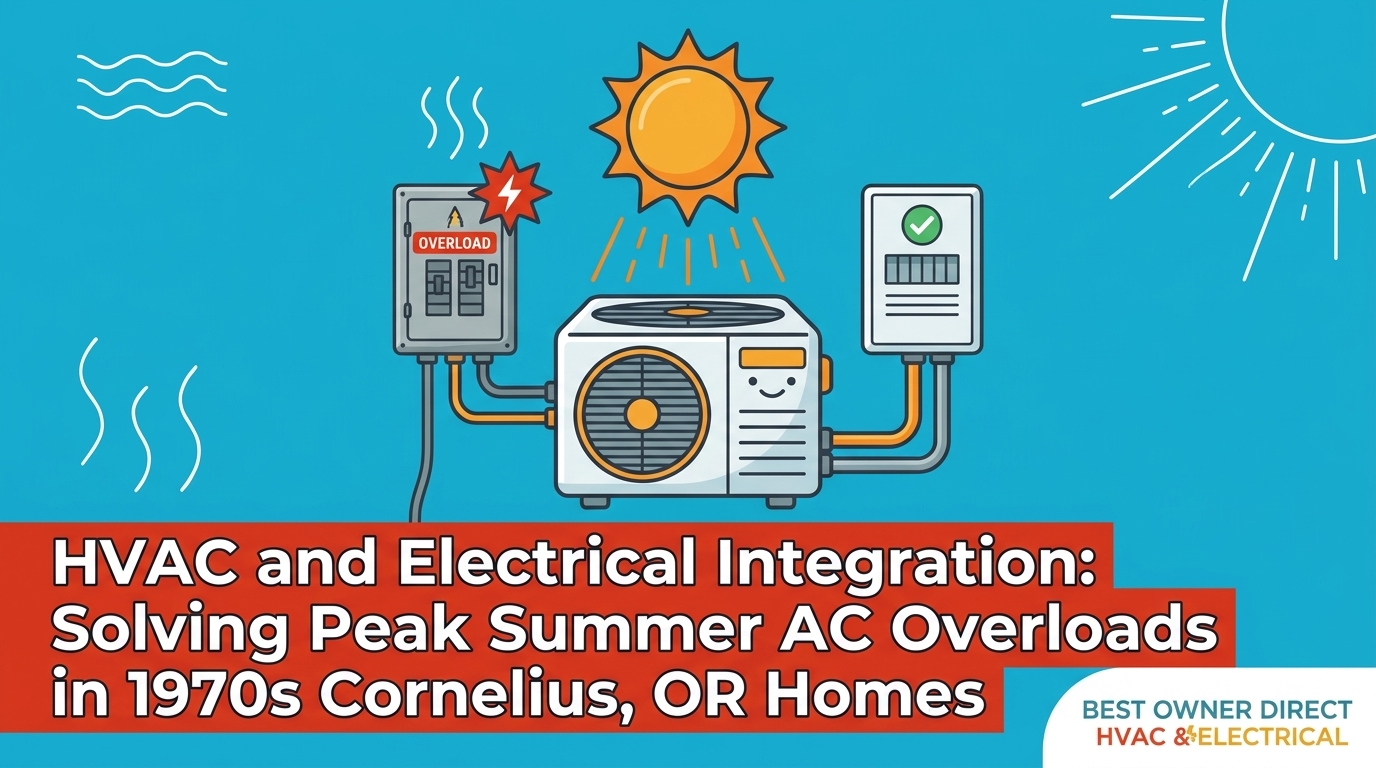
How Cornelius Homes Handle Peak Summer AC Loads on Older Electrical PanelsModern AC units often overwhelm aging 1970s electrical panels during intense summer heat. Review the warning signs and specific upgrades needed to keep your home safely cooled.
Read more
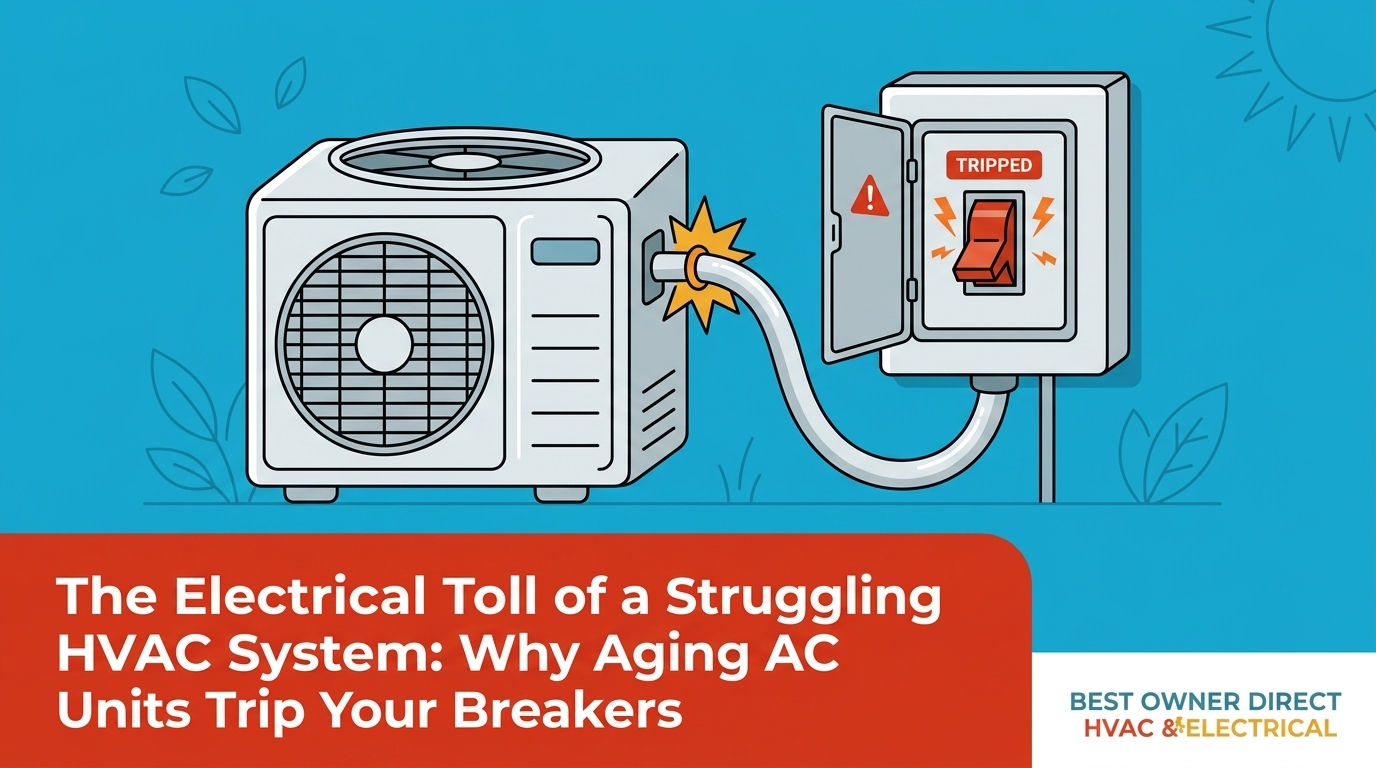
The Electrical Toll of a Struggling HVAC System on Your Home's BreakersAn aging air conditioner does not just lose cooling power; it actively stresses your electrical panel. A tripping breaker during late summer heat is a warning sign requiring professional diagnosis.
Read more
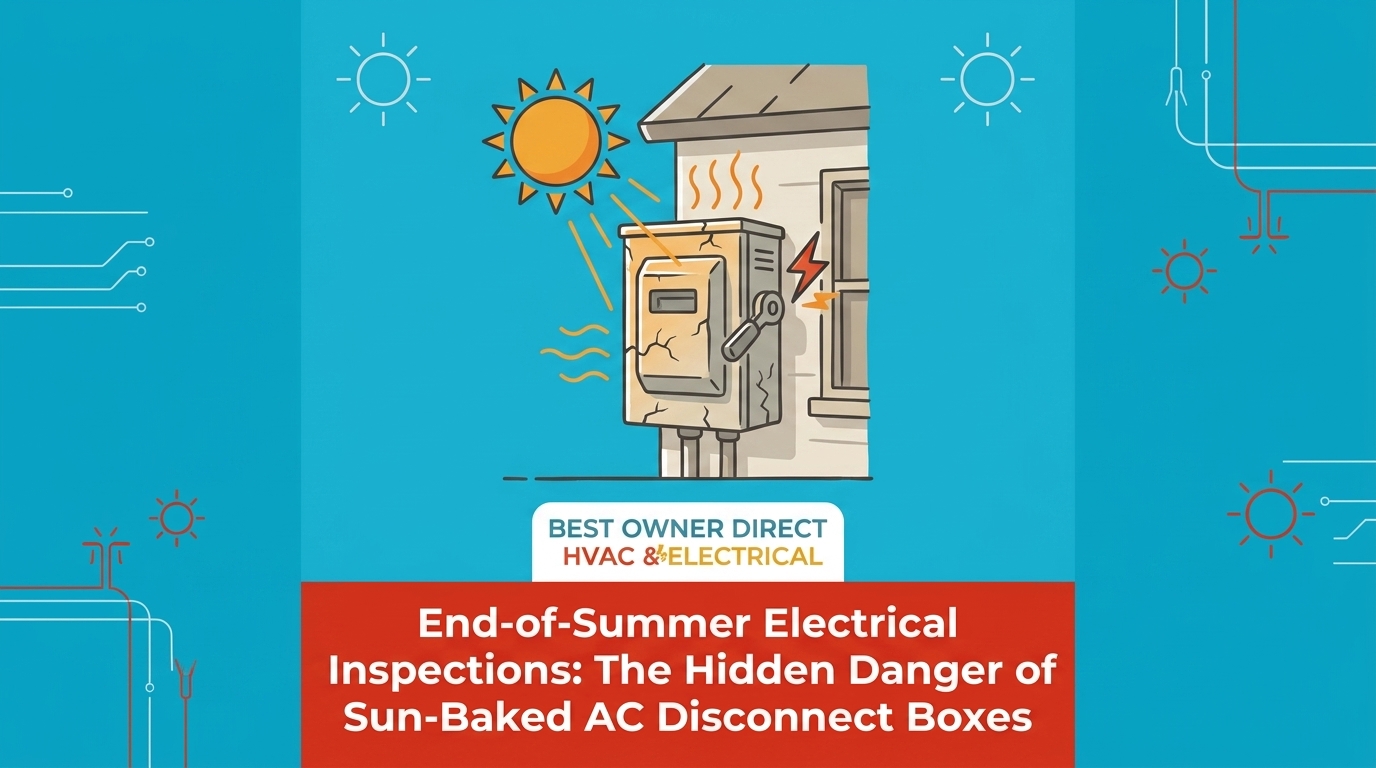
End-of-Summer Electrical Inspections: Checking Outdoor Disconnect BoxesAfter months of intense Pacific Northwest sun, your outdoor AC disconnect box can become brittle and unsafe. Learn the visual warning signs of UV degradation.
Read more